Crafts
The material the Culture Code reads. Each craft is read as a working language: a vocabulary of motifs and materials, a grammar of combination, an expressive range a fluent practitioner commands.
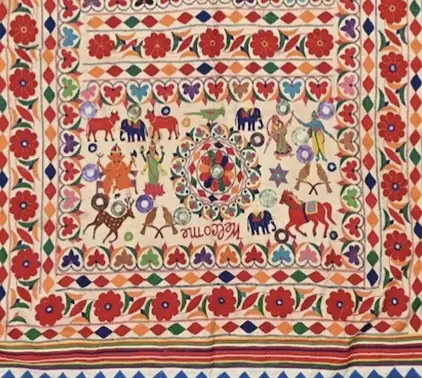
Banjara Embroidery
Banjara embroidery is the dense pieced-and-stitched textile work of the nomadic Banjara, Lambadi, and Lambani communities scattered across Telangana, Karnataka, Andhra Pradesh, and Rajasthan.
Batik
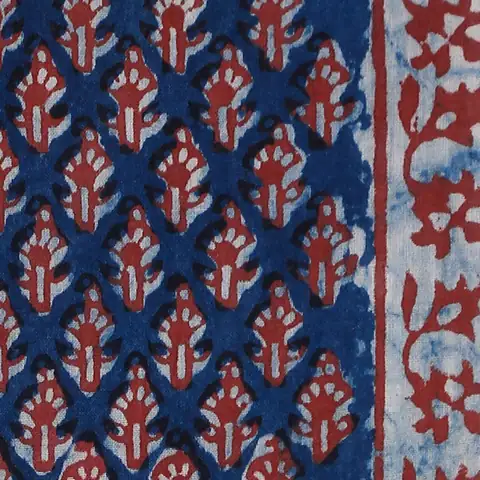
Batik is a wax-resist dyeing technique in which molten wax is drawn or stamped onto cloth with a canting pen or a copper cap block, then the cloth is submerged…
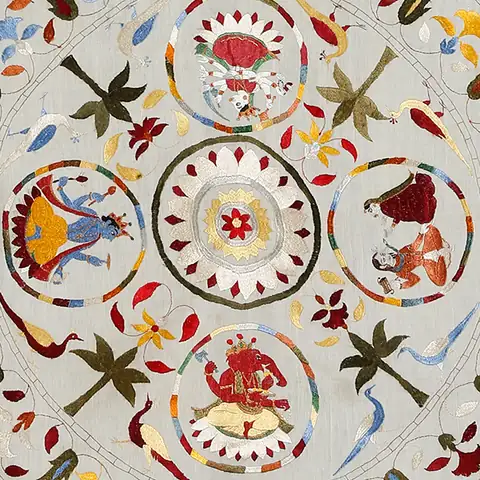
Chamba Rumal
Chamba Rumal is the double-sided embroidery tradition from Chamba in Himachal Pradesh, executed in untwisted silk floss on hand-spun cotton or muslin.
Crochet
Crochet is a looped-thread construction technique worked with a single hooked needle, distinct from knitting's two-needle interlock and from weaving's crossed-warp-and-weft structure.
Jewellery from Assam
Assamese traditional jewellery is worked in gold, historically by the Sonari goldsmith community, using repoussé and lost-wax casting to raise pattern from thin sheet gold rather than setting stones as…
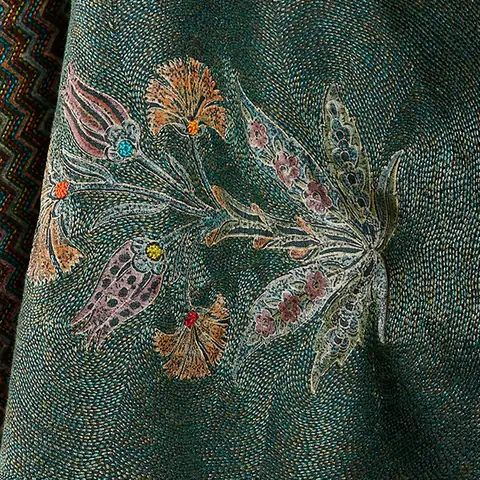
Kantha embroidery
Kantha is the Bengali running-stitch embroidery tradition rooted in the domestic textile economy of rural Bengal, running across both West Bengal in India and the regions that now form Bangladesh.
Koftgari
Koftgari is the Indian damascening tradition, the craft of overlaying fine gold wire, and sometimes silver, onto a steel ground.
Madhubani painting
Madhubani painting is the wall and floor painting tradition of the Mithila region of Bihar, carried across multiple centuries by a continuous line of women practitioners.
Marble Inlay (Agra)
Marble Inlay names the parchin kari tradition of Agra, the technique of cutting and inlaying semi-precious stones into marble grounds.
Moonj Basketry
Moonj basketry is the wild-grass coiled and woven craft of eastern Uttar Pradesh, worked from moonj (a tall wild grass, Saccharum munja) and the finer sarpat grass that grows along…
Panja Dhurrie
Panja dhurrie is a cotton flatweave tradition practiced in Dausa, Rajasthan, that takes its name from the panja, the metal claw tool used to beat the weft tightly into place…
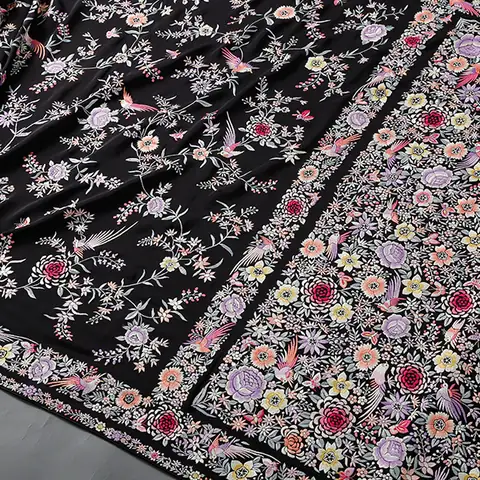
Parsi Gara
Parsi Gara is a hand-embroidered textile tradition carried by the Parsi community, worked most often on the border and pallu of a sari or on panels for other garments.
Patola
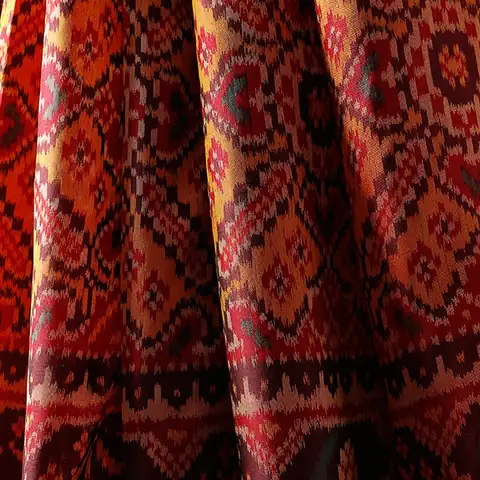
Patola is the double-ikat silk textile tradition of Patan in northern Gujarat, woven by the Salvi family lineage across an unbroken several-hundred-year history.
Phad Painting
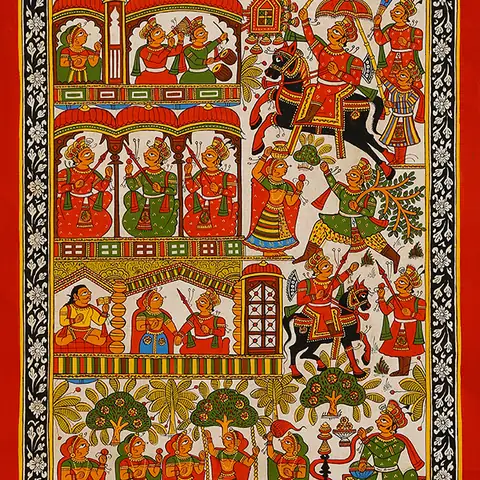
Phad painting is the Rajasthani narrative scroll painting tradition that renders the legends of Pabuji and Devnarayan across long horizontal cloth scrolls.
Tangaliya Weaving
Tangaliya is a hand-woven wool textile tradition distinguished by its extra-weft dot technique, called daana, in which the weaver twists small tufts of contrast-color wool into the warp during weaving…
Telia Rumal
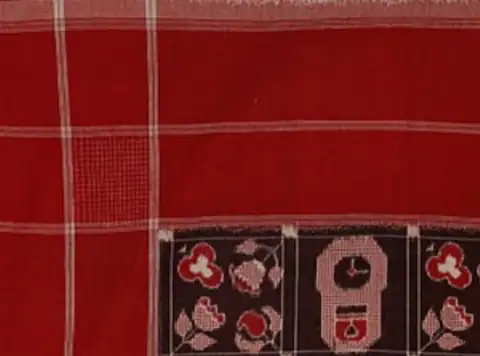
Telia Rumal is the oil-treated double-ikat cotton textile tradition of the Nalgonda region in Telangana, related to but distinct from the broader Pochampally Ikat register.
Uthavache Kaam
Uthavache kaam is the raised, or repoussé, metalwork of Maharashtra, worked by hammering sheet copper, and brass, from the reverse to push the design into relief, then chasing the front…
 Then a concept study that takes one tradition's vocabulary into digital form.
You will learn What 300 hand-carved blocks can compute, and what a machine cannot decide.
Then a concept study that takes one tradition's vocabulary into digital form.
You will learn What 300 hand-carved blocks can compute, and what a machine cannot decide.
The reading stands on four scholars. Read the foundations.