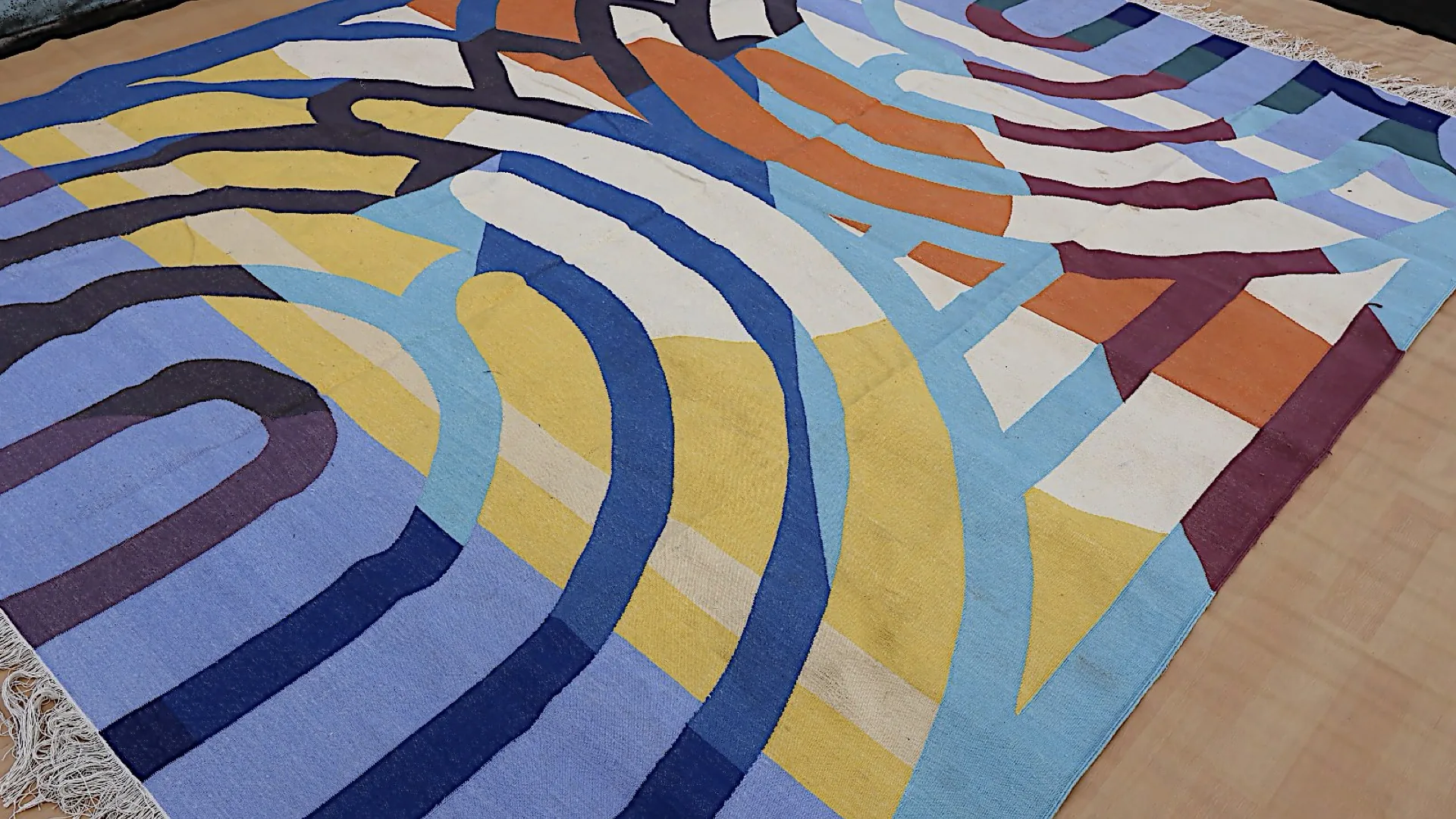
Summary#
The piece is the opening essay of the Dadar Edit series and the first public account of the three-carpet commission for Broadway Malyan’s Mumbai studio. It extracts the cultural translation method from the project record, a chain that runs from place to narrative to pattern to weave. The essay argues that Dadar’s four-century arc, from fishing village to Portuguese settlement to British trade quarter to financial capital, resists a single reading, which is why the collection carries three carpets rather than one. It grounds the argument in the specific crafts and geographies involved: Kharad weaving from Bhuj, Panja dhurrie from Dausa, and Bhadohi hand-tufting from Uttar Pradesh. The essay closes by naming the collaboration as a Patron-and-Artist model that ran across five locations on a single WhatsApp thread.
Key claims#
The first claim is that a place with a layered history calls for multiple readings rather than a single narrative, and the three-carpet structure is the direct answer to that claim. The second claim is that a craft’s grammar constrains and enables the translation at once: Kharad’s flatweave carries layered juxtaposition, Panja’s cotton precision carries geometric clarity, Bhadohi’s tufted depth carries cartographic detail, and none of the three could carry the other’s reading. The third claim is that the collaboration format matters as much as the design decision: an asynchronous, image-rich channel across artisan workshops in Bhuj, Dausa, and Bhadohi let production work travel and return with design feedback inside a single day.