Summary#
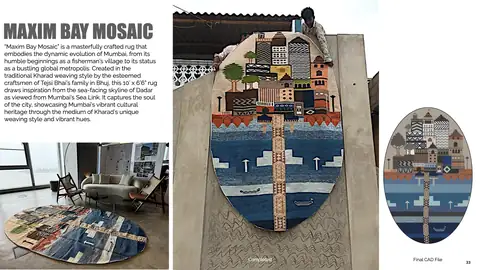
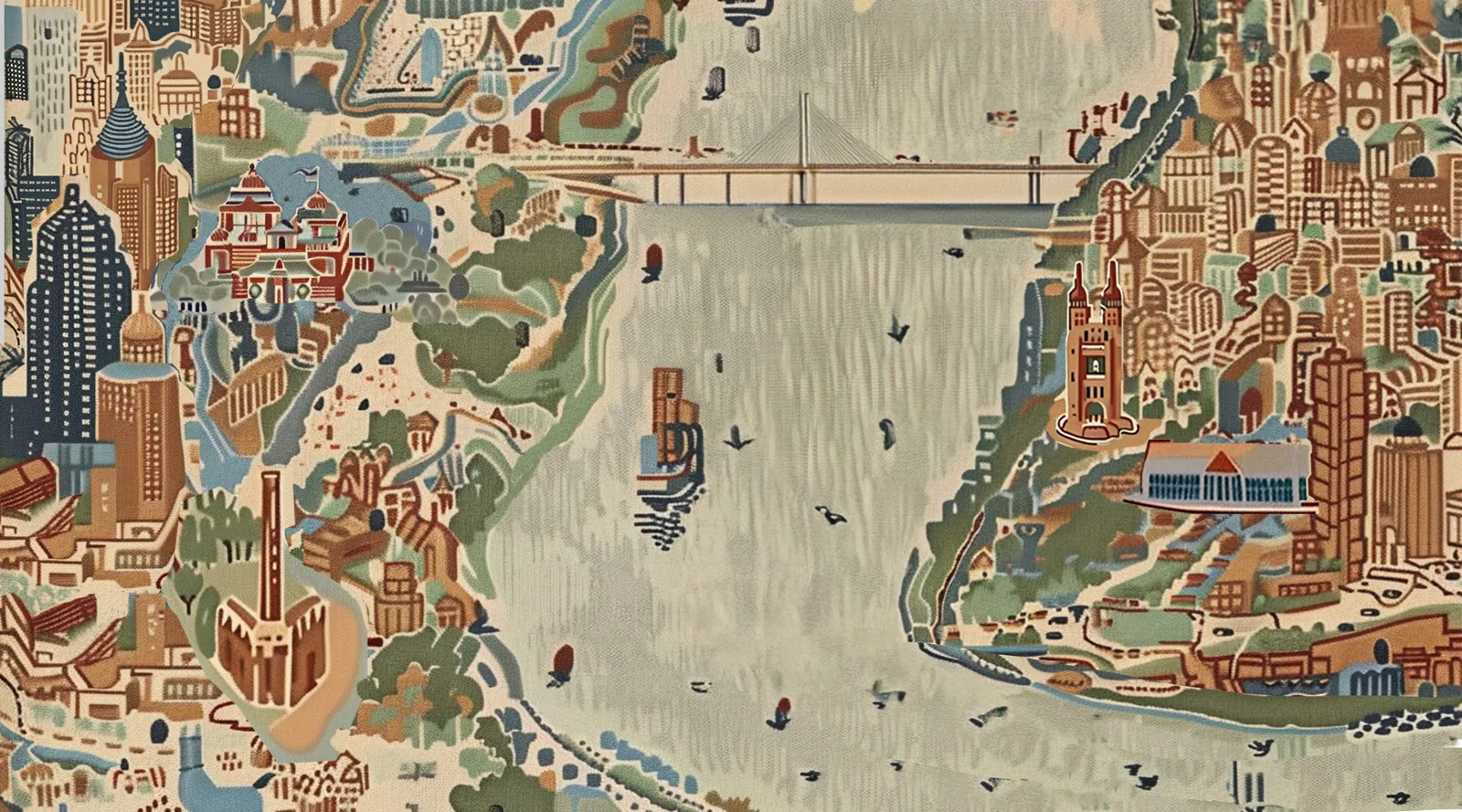
Dadar Scape is the first per-carpet essay in the Dadar Edit series, carrying the Bhadohi hand-tufted piece from the collection. The 18-foot by 10-foot carpet reads Dadar from directly above, a bird’s-eye map of Mahim Bay carrying the Mithi River and the Bandra-Worli Sea Link rendered in tufted wool. The essay argues that Bhadohi’s tufting depth is the craft best suited to cartographic detail, able to hold the scale and layered geography of a bay view in a way flatweave cannot. The piece shipped as a hub-and-spoke set: the Substack essay as hub, an Instagram carousel and a boosted reel as visual spokes, and a LinkedIn post carrying the same argument to a professional audience.
Key claims#
The first claim is that an aerial map is itself a cultural argument. It is not a neutral diagram, because the choice of what enters the frame (the bay, the river, the sea link) already decides what version of Dadar gets told. The second claim is that Bhadohi’s tufting technique is uniquely suited to that argument, since its depth and shading carry the cartographic detail a flatweave could not hold. The third claim, carried by the reel and its music bed built to sound like a solo sarod, is that a making film can do editorial work that a still image cannot, letting process become part of the argument for craft authorship. The track was produced using an AI generation tool; which tool, and the rights status of the track, are unconfirmed.
Companion pieces#
The reel ran with a paid boost and outperformed every other post in the Dadar Edit set by a wide margin (over 80,000 views against low thousands for the organic posts), recorded as the strongest single distribution result across the series baseline window captured 2026-06-19.