Summary#
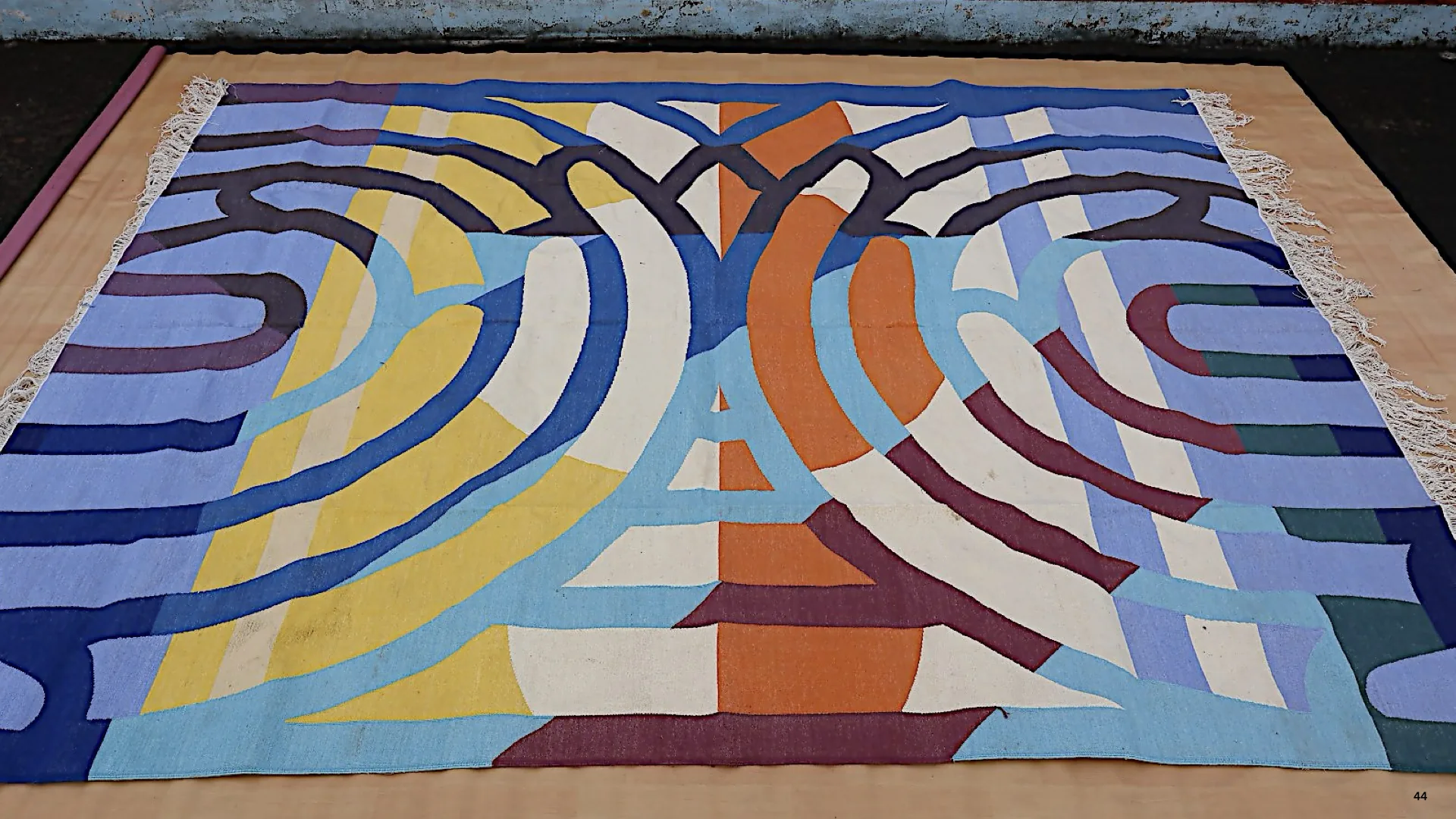
La Deco Mumbai is the third per-carpet essay in the Dadar Edit series, carrying the Panja dhurrie piece, an 11-foot by 9-foot flatweave. The essay reads Dadar through its Art Deco legacy, abstracting the iron railing patterns of the neighborhood’s Parsi Colony into Panja’s cotton geometry, rendered in the exuberant color of the global Art Deco age. Unlike the other two carpets in the collection, this piece used no generative-image research stage. The design was drawn directly from the railings into the loom, a pure design-and-craft translation. The essay shipped with an Instagram carousel and a LinkedIn post; an Instagram reel for this piece was in production but not yet posted as of this register’s baseline.
Key claims#
The first claim is that Dadar’s Art Deco inheritance is as legitimate a cultural layer as its maritime geography, and a collection that reads only the coastline would miss a defining stratum of the neighborhood’s built history. The second claim is that Panja’s cotton precision is the craft suited to geometric clarity, able to hold the hard edges and repeat logic of Deco ironwork in a way a softer flatweave could not. The third claim, made implicitly by the absence of an AI research stage on this piece alone, is that direct architectural reference is sometimes the more honest translation path, and that the practice’s use of generative tools in the other two carpets was a choice specific to those readings rather than a default method.
Companion pieces#
The Instagram carousel ran organic and was largely home-feed led, a review on 19 June 2026 noting it as more feed-discovery-driven than the other two carousels in the series. An Instagram reel for La Deco Mumbai was in production as of this register’s baseline (2026-06-23) but had not posted; it had not been posted by 23 June 2026.