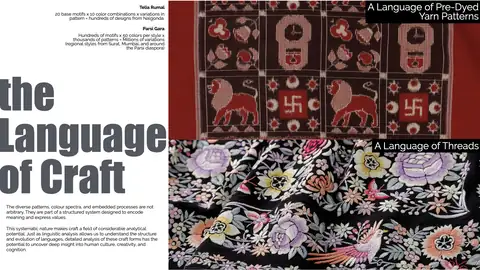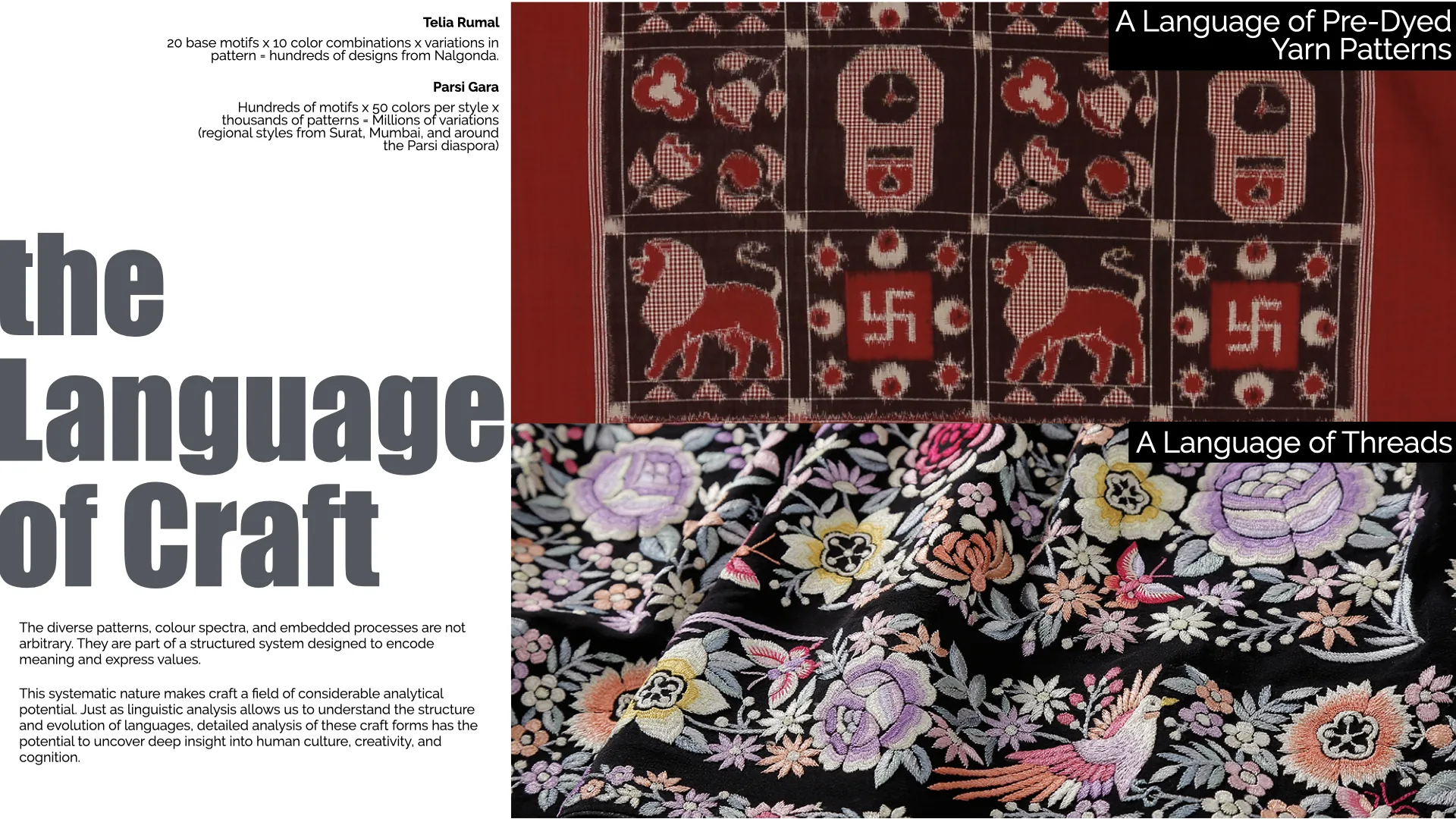
What it shows#
A two-panel comparative slide from the Jaipur workshop, slide 008. The left panel carries Telia Rumal evidence, with a caption reading “Telia Rumal, 20 base motifs x 10 color combinations x variations in pattern = hundreds of designs from Nalgonda.” The right panel carries Parsi Gara evidence, with a caption reading “Parsi Gara, Hundreds of motifs x 50 colors per style x thousands of patterns = Millions of variations (regional styles from Surat, Mumbai, and around the Parsi diaspora).”
Why it matters#
The slide is the visual proof of the Culture Code argument that craft is language. The vocabulary (motifs, colors, materials) and the grammar (the combinatorial rules) produce a near-infinite expressive range from a finite base, which is the structural property of every natural language. The two-panel format puts the argument in side-by-side evidence: Telia Rumal shows the mathematics at the scale of a single regional tradition, Parsi Gara shows the same mathematics compounding across regional styles and diaspora variation into millions of combinations. The audience leaves slide 008 with the linguistic claim grounded in two specific living traditions.