The claim#
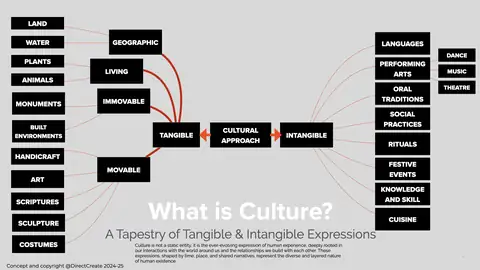
Harold Proshansky, working in environmental psychology, treats physical environments as constitutive of identity rather than as a backdrop to it. A person’s sense of self forms in relationship to the geographic settings, built environments, and movable cultural objects that surround them through formative experience. Place identity is therefore a structural feature of the self rather than a decorative one, and an identity reading that ignores the physical settings has missed the substrate on which the identity stands.
Direct Create's reading#
Proshansky is the foundation under the Culture Stack’s insistence on specificity. The “Understanding Identity” post cites Proshansky’s place identity theory as the anchor for “identity rooted in physical spaces and cultural objects.” That framing is what makes a Culture Stack a reading of a specific site rather than a generic brand, and what makes its irreducibility (a Coorg reading cannot be reused in Mumbai, one reading cannot be reused in another place) a structural property rather than an inconvenience. A Culture Stack is hyper-local by design, because purpose and place together decide what matters, and no Study transfers from one to another. Place identity theory gives the principled answer to the question of why the work needs to be place-specific.
What Direct Create takes and what it adds#
Proshansky gives the place-as-constitutive frame and the recognition that geographic and built environments shape identity at the structural level. Direct Create adds the reading apparatus that turns place identity from a theoretical claim into a working method: Culture Stacking investigates the universal cultural Fields, tangible and intangible, in one specific place, and turns each Field the place actually yields into a sourced, place-specific Finding. The Fields are unordered and interdependent, so the reading holds the connections between them rather than a fixed sequence of strata. In the Argument stage, the Findings are given relative Emphasis for the project’s purpose, which is where judgment and locality enter the method. The place-as-constitutive grounding remains; the field-into-finding instrument is Direct Create’s contribution.
Sources#
Contemporary placemaking discourse that carries Proshansky’s claim at assertion level, useful as the baseline DC’s method-led argument engages:
- “The Role of Local Identity in Successful Placemaking Projects,” Perfect Circle. https://www.perfect-circle.co.uk/blog/post/the-role-of-local-identity-in-successful-placemaking-projects (SECONDARY; located 2026-06-06)
- “Placemaking Process, Cultural, and Identity Formation Based on Inclusive Sustainable Development: Surabaya, East Java Indonesia,” Springer Nature, 2026. https://link.springer.com/chapter/10.1007/978-981-95-4530-8_8 (SECONDARY; located 2026-06-06)